The Eye–Neck Connection: How Screens Are Changing Our Posture

Look around in any café, metro, or waiting room.
Almost everyone is looking down at a phone.
This daily habit is quietly changing the posture of an entire generation.
Neck pain, once common mostly in adults, is now appearing in children and teenagers.
Many young people already show a forward head posture and rounded shoulders, patterns that used to develop only later in life.
A key reason lies in the close relationship between the
eyes, the head, and the neck.
The Eyes Guide the Position of the Head
The neck’s main role is to stabilize the head so the eyes can maintain a clear visual field.
When the eyes move naturally, looking into the distance, scanning the environment, and shifting focus between different depths, the head and neck remain relatively balanced.
But modern screen use changes this behavior.
Instead of exploring a wide visual field, the eyes often remain fixed on a small screen or a computer at a short distance.
At the same time, the head tilts downward and often fixing always the same screen/spot for too long
This position forces the neck muscles to support the weight of the head in a forward angle.
The human head weighs around 4 to 5 kilograms, but when it tilts forward the mechanical load on the cervical spine increases significantly.
Maintaining this position for long periods can gradually lead to muscular fatigue, stiffness, and discomfort in the neck and shoulders.
When Eye Movement Becomes Limited
Healthy vision involves constant movement.
The eyes shift direction, adjust focus, and explore different distances.
Screen use reduces this variability.
Instead of large movements and depth changes, the eyes perform small repetitive movements within a narrow visual range, while the focus remains at a close distance.
Meanwhile, the neck remains almost static while supporting the head in a downward position.
Over time, this combination can create tension in the muscles of the neck and upper back.
Why Children Are Showing “Older” Posture
Forward head posture has long been associated with aging.
Over the years, gravity and muscular imbalance may gradually pull the head forward in many adults.
Today, similar patterns are appearing much earlier.
Many children spend a large part of their day looking down at phones, tablets, or gaming devices.
Repeating the same downward gaze encourages the body to adapt to that position: the head moves forward, the shoulders round slightly, and the upper back becomes more curved.
The body adapts to what it does most often.
The Link Between Visual Strain and Neck Tension
Visual concentration can also influence muscle activity in the neck.
When the eyes focus intensely on small text or detailed images, the body may subtly adjust the head position to improve visual clarity.
This adjustment can increase tension in the trapezius and other muscles that stabilize the neck and shoulders.
Encouraging the eyes to move regularly and allowing visual breaks can therefore help reduce unnecessary stress on the neck.
Some eye relaxation techniques were popularized by William Horatio Bates
and are also present in traditional yoga eye practices.
Simple Eye Exercises
Encouraging movement in the eyes can help reduce visual fatigue and may also ease tension in the neck.
One simple exercise can be done with a pen.
Hold a pen in front of you and follow the pen only with your eyes while keeping your head still.
Move the pen:
- Side to side
- Up and Down
- Zoom in, Z00m out ( Slowly bring the pen closer to your eyes and move it away )
This exercise encourages the eyes to move and adjust their focus instead of remaining fixed on a small screen.
- Palming
Rub your hands together to create warmth and gently place your palms over closed eyes without pressing. Resting the eyes in darkness allows the visual system to relax. 30 to 2 minutes
- Sun relaxation
With the eyes closed, briefly face natural sunlight.
The warmth and brightness can help the eyes relax after long periods indoors.
30 seconds to 1 minute
A simple habit often recommended for people working with screens is the 20-20-20 rule: every 20 minutes, look at something about 20 feet away for 20 seconds.
In addition to these exercises, I will share few additional eye exercises by video, which can further help mobilize the visual system and relax the muscles involved in prolonged screen use.
A Simple Idea to Remember
Our eyes guide the position of our head, and the head shapes the posture of the spine.
When our visual world shrinks to the size of a phone screen, the body gradually adapts to that small space.
Sometimes neck pain is not about the neck at all
It is the body adapting to how we look at the world today: through the screen of a phone.
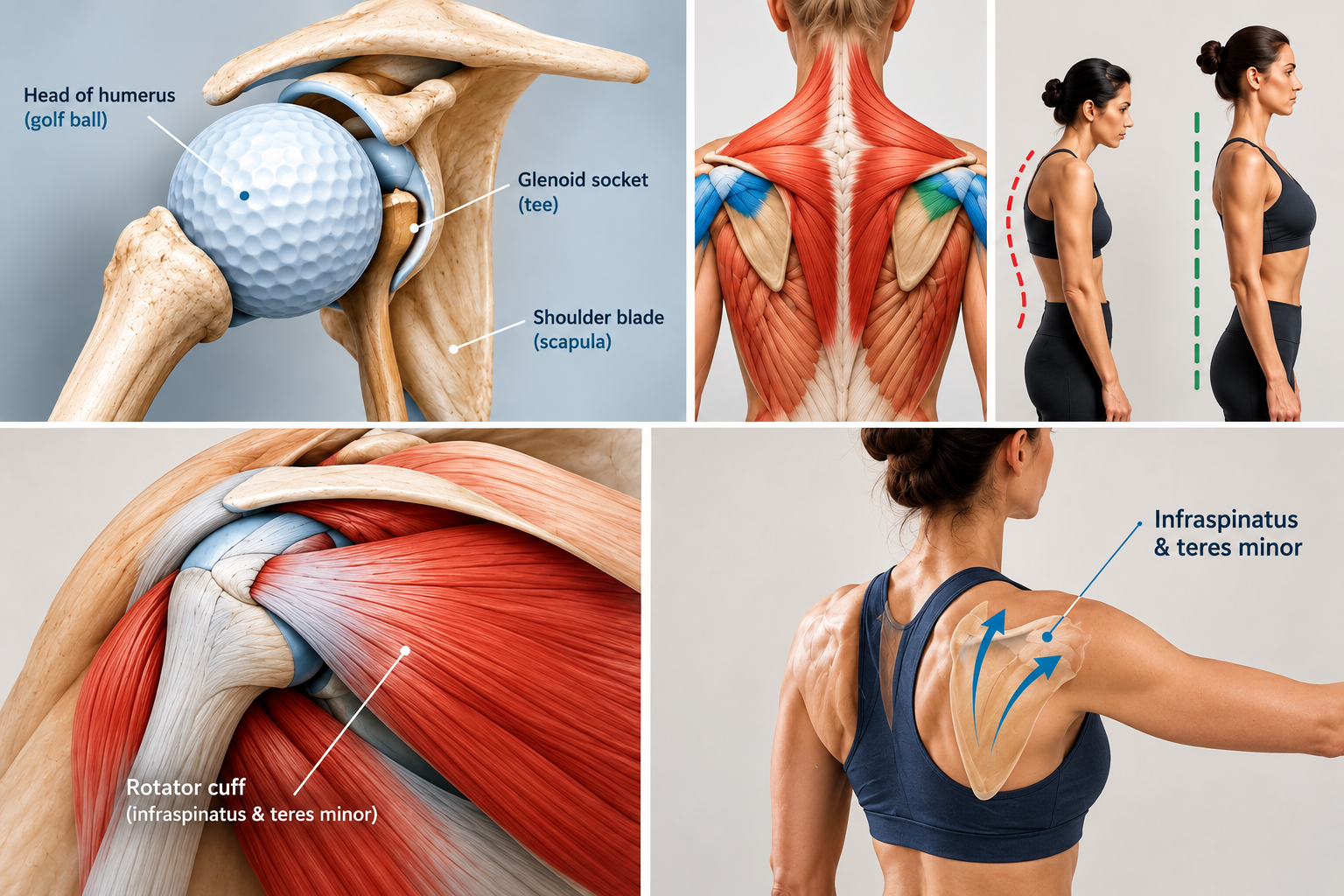
Strong Shoulders Start at the Shoulder Blades: Improve Stability, Support Your Neck and Build Better Posture

Breathe Through Your Nose Manage Stress and Improve Your Well-Being

The TFL: The Pain Is Often a Sign, Not the Cause
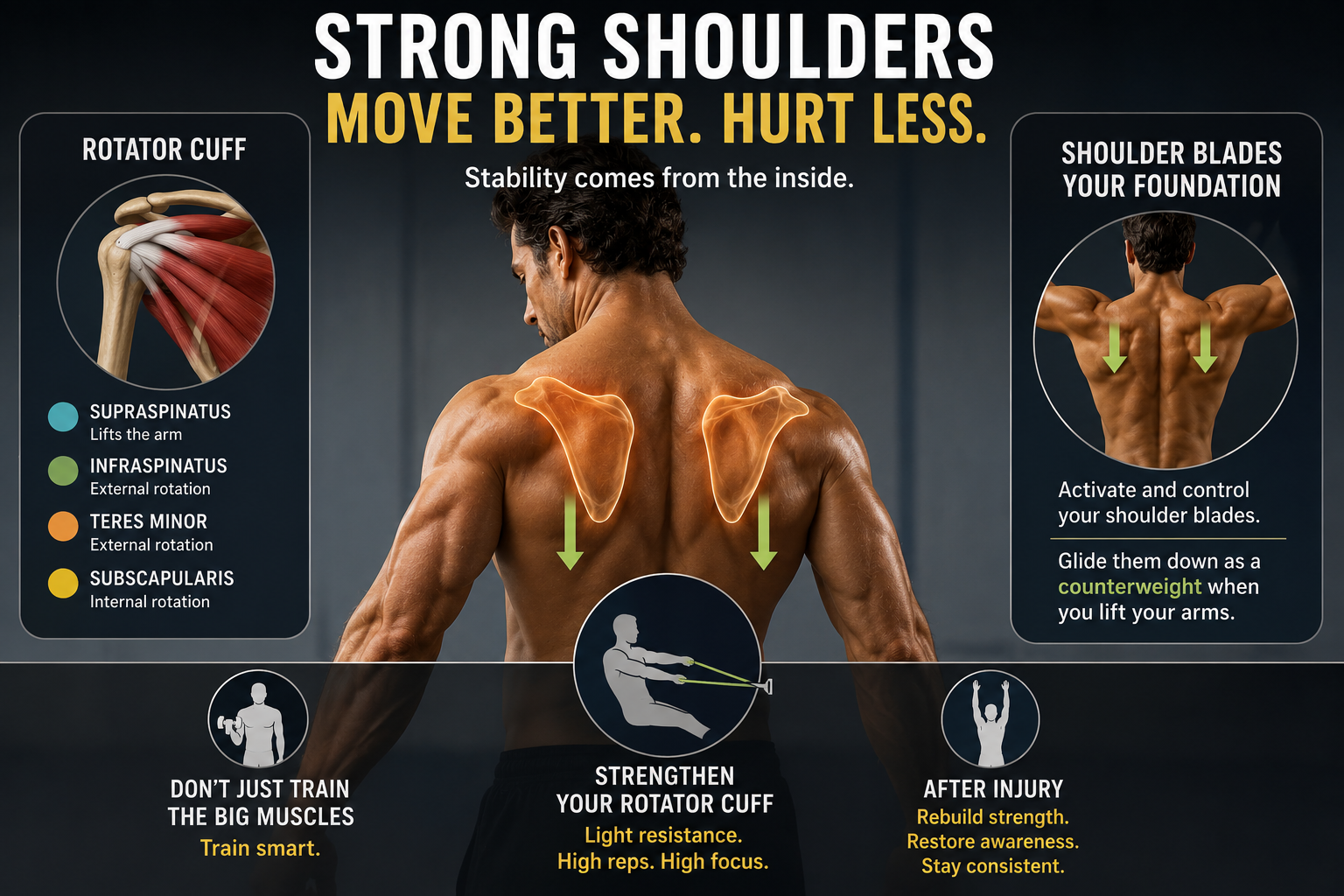
The Shoulder: Maximum Mobility Needs Maximum Stability
Beyond the Bend Why Flexibility Isn’t Just About Stretching

Feed Your Gut, Not Your Cravings

Flat belly-Visible Abs: The Truth Behind a Strong Core

How I Stay Healthy, Energetic, and Youthful: My Personal Approach to Longevity

Unlocking Your Muscle Shape The Hidden Role of Fascia and Full Range of Motion
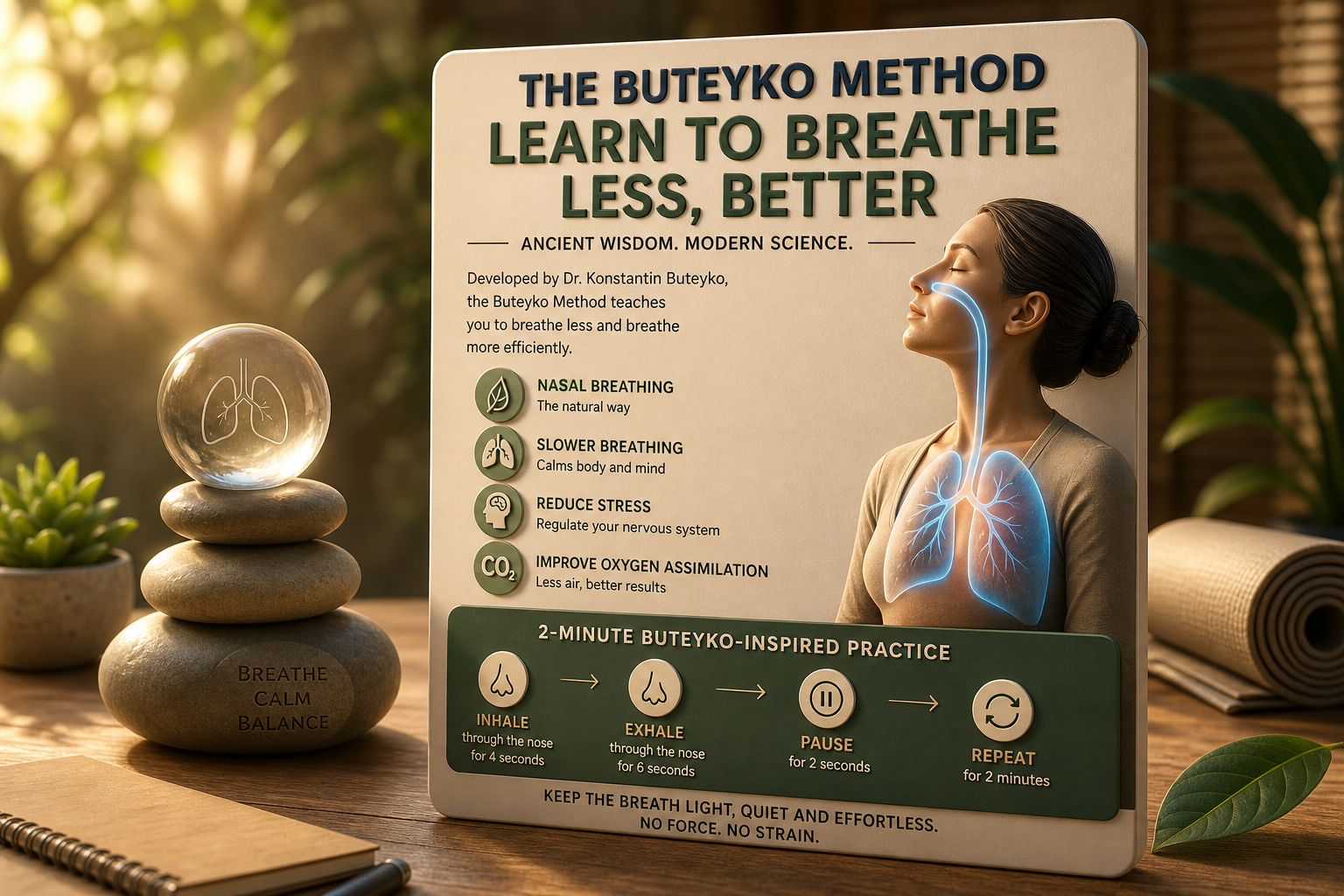
The Buteyko Method: Learn to Breathe Less, Better