The Shoulder: Maximum Mobility Needs Maximum Stability
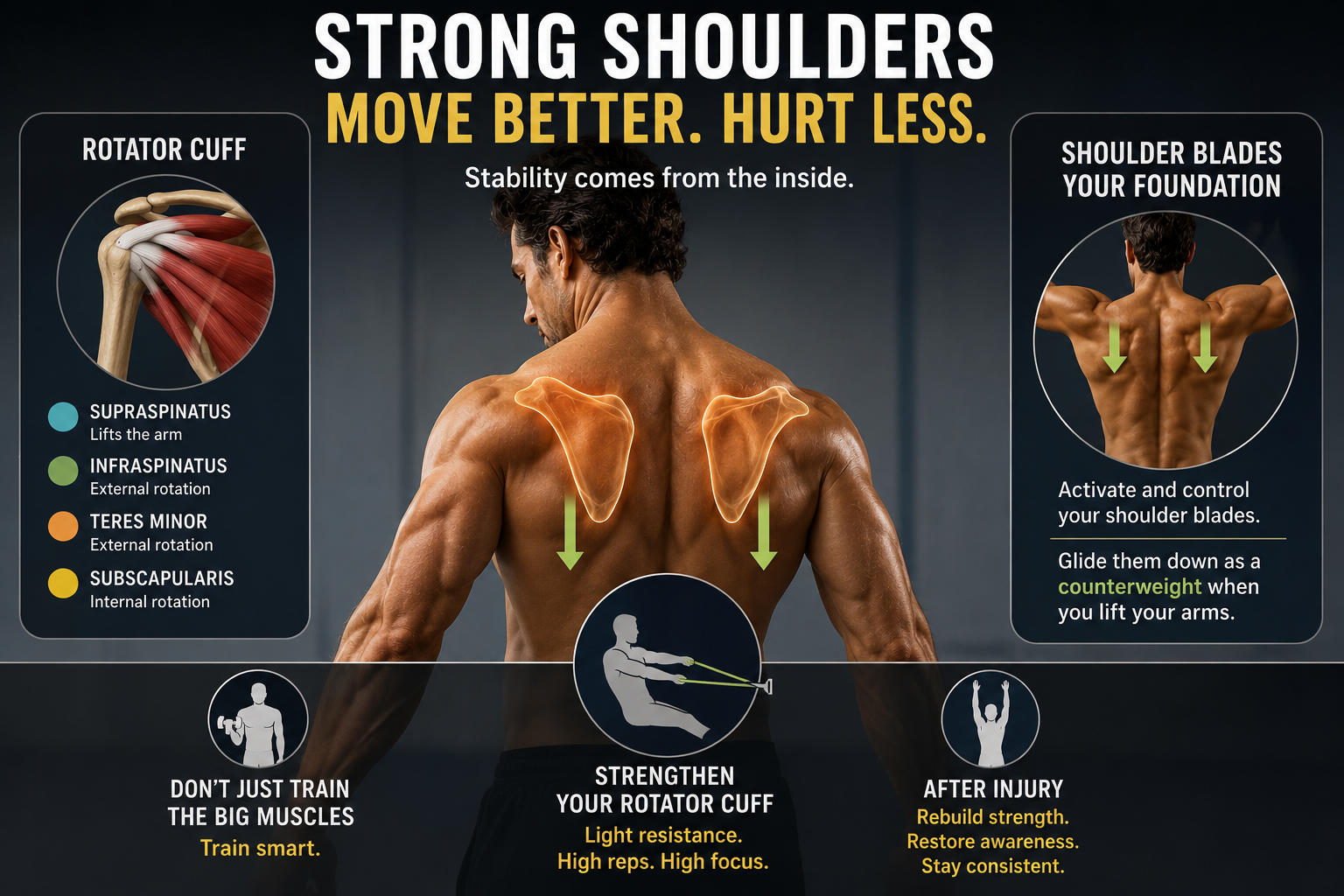
The shoulder is the most mobile joint in the body — but this incredible mobility also makes it one of the most vulnerable joints to injury, not only for athletes but for everyone.
The head of the humerus is large and spherical, while the shoulder socket (glenoid) is relatively shallow. This allows a huge range of movement, but it also means the shoulder depends heavily on its muscles for stability and control.
The Rotator Cuff: Small Muscles, Big Responsibility
The rotator cuff is made up of four small muscles:
- Supraspinatus — assists with lifting the arm
- Infraspinatus — external rotation
- Teres minor — external rotation
- Subscapularis — internal rotation
Together, they help keep the head of the humerus correctly positioned inside the socket while the arm moves.
Yet most fitness training focuses on the large muscles ; deltoids, chest, lats, biceps and triceps.
The rotator cuff needs a different approach: lighter resistance, controlled movement, higher repetitions and high concentration.
The goal is not to lift heavy.
The goal is endurance, coordination and stability.
Don’t Forget Your Shoulder Blades
Good shoulder movement starts with good scapular awareness and control.
Poor shoulder-blade stability and a lack of strength around the scapula can contribute to shoulder dysfunction and, in some cases, neck and shoulder discomfort. Of course, not every neck or shoulder problem comes from the shoulder blade, so the cause should always be assessed individually.
Before moving your arms, learn to activate and control your shoulder blades.
When you lift your arms, think about gently gliding your shoulder blades down, like a counterweight to your arms.
Don’t force them down or lock them in place.
Think about creating a stable, controlled base that allows the arms to move freely and the rotator cuff to work efficiently.
After a Shoulder Injury
After a labral tear, shoulder dislocation or other shoulder-joint injury, rebuilding rotator cuff strength and shoulder-blade awareness is an important part of restoring stability and control.
Don't concentrate only on rebuilding the strength of your major muscles.
It's important to train your shoulder to manage movement effectively. Subtile movements first.
I'm sharing a video that explains the location of these muscles in the body, their functions, and how to strengthen them.
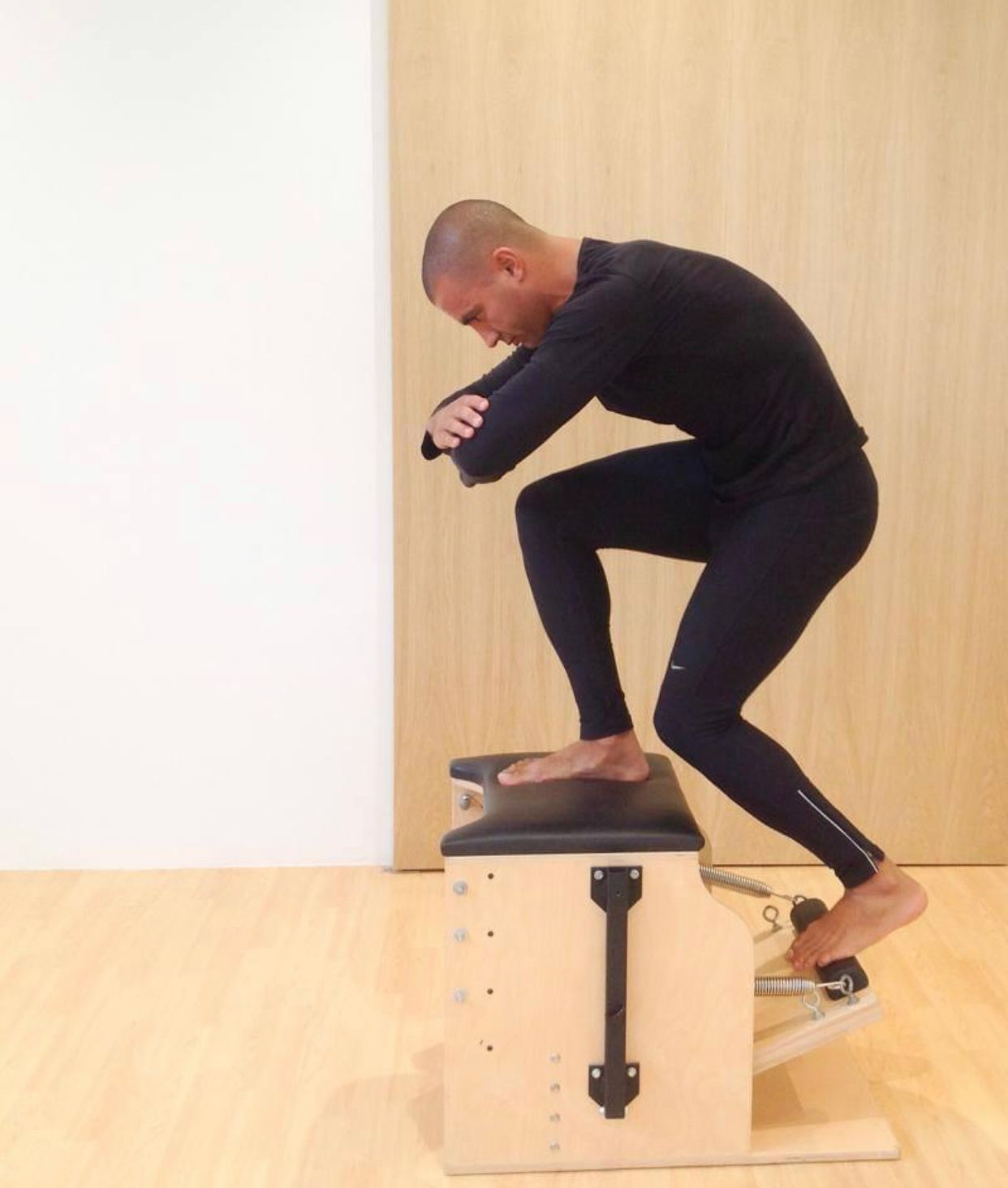
Additionally, I'm reminding you of one specific exercise.
Although it's just one exercise, remember to incorporate it into your routine consistently.
Rotator Cuff + Shoulder Blades = Your best team against shoulder pain, instability and injury