The TFL: The Pain Is Often a Sign, Not the Cause
Why that tight, achy spot on the outside of your hip may be the messenger, not the source of the problem.

One of the most common patterns I see in clients is tension or pain around the TFL, IT band, glutes, groin, hip, and sometimes the lower back or sacroiliac area.

The natural reaction is to treat the painful spot. We often concentrate on the area that hurts, doing our best to alleviate it, yet the pain persists and keeps returning!

But the body doesn’t work muscle by muscle. It works through chains of movement.

Sometimes, the area that feels tight is simply the area working hardest to compensate.


What is the TFL?

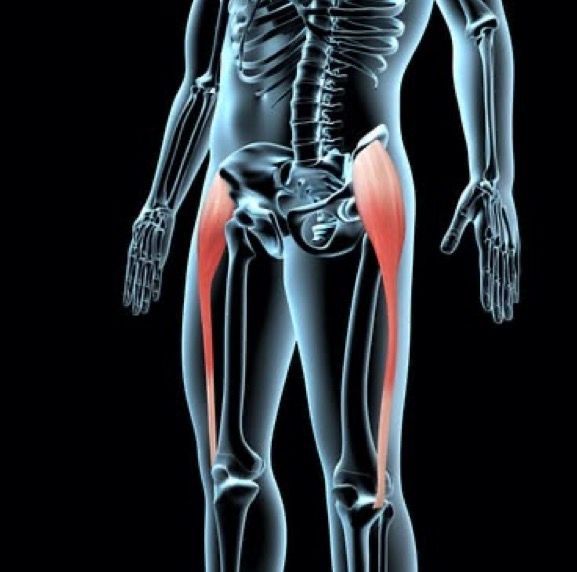
The Tensor Fasciae Latae (TFL) is a small muscle at the front and outer side of the hip, roughly where your front trouser pocket sits.

Its main jobs are to:

Help lift the leg forward ; hip flexion.

Help move the leg sideways ; hip abduction.

Contribute to internal rotation of the femur.

Help stabilize the hip and pelvis, particularly during walking and single-leg movements.

The TFL works closely with the gluteal muscles and connects directly into the iliotibial band (ITB).


And what is the IT band?

The IT band is not a muscle.

It is a strong band of connective tissue running down the outside of the thigh.

The TFL and gluteus maximus both contribute to it, helping transmit forces between the pelvis, hip and knee.

This is why I don’t recommend aggressively attacking the IT band with a foam roller.

You can compress it, but you cannot make it contract and relax like a muscle.

Instead, I prefer to work on the muscles influencing the tension around it, particularly the TFL and glutes.

Foam rolling may provide temporary relief from sensitivity and enhance your range of motion; however, I would not recommend it , as it can potentially harm the ITB, which is not meant to be stretched or have pressure applied to it. Remember, the ITB is not a muscle.


Why does the TFL become overworked?

The body is constantly looking for stability.

If the glutes are not contributing efficiently, the hip lacks stability, or the movement of the leg is poorly controlled, the TFL may start doing more work to help.

And the problem doesn’t necessarily begin at the hip.

An old foot or ankle injury, for example, can change how someone loads the leg.

That can influence the ankle, knee, hip and pelvis.

Over time, the body adapts to that movement strategy.

Training can create similar patterns, particularly with repetitive, asymmetrical movements, sudden increases in workload, poor technique or insufficient recovery.

The result can be a chain of compensation:

Foot → ankle → knee → hip → pelvis → lower back

And the TFL may become one of the muscles absorbing the extra workload.


The TFL and glutes: working together, not against each other

The TFL and gluteal muscles have different but overlapping roles.

The gluteus medius, for example, is particularly important for hip abduction and controlling the pelvis and femur during single-leg movement. Its different fibers can contribute differently to hip rotation depending on the position of the hip.

The gluteus maximus is a powerful hip extensor and also contributes to controlling the hip and pelvis.

When these muscles are not working efficiently, the TFL may become more dominant.

That doesn’t mean the TFL should never work.

It means it shouldn’t have to do everyone else’s job.


What does the research tell us?

A study published in the Journal of Orthopaedic & Sports Physical Therapy compared TFL and gluteal activation during several common hip exercises.

Exercises such as clamshells, resisted sidesteps, single-leg bridges and quadruped hip extensions produced relatively favorable gluteal-to-TFL activation patterns in that study.

This can help guide exercise selection when we want to strengthen the glutes without unnecessarily emphasizing TFL activity.

But EMG activation is not the same as clinical improvement. (Electromyography (EMG) muscle activation measures the electrical currents produced by muscle fibers when they contract in response to nerve signals).

There is no single “best” glute exercise for everyone.

Remember, we are all unique and distinct.

Even when theories and experiments have been validated, a single approach doesn’t suit everyone.

Select the exercise that resonates with your body and its feedback.

The right exercise depends on the person’s strength, mobility, control and symptoms.


So what should we do?

1. Release the tension

Start by reducing excessive muscular tension.

This is where a foam roller can be useful.

Rather than aggressively rolling directly over the IT band, work through the surrounding muscular chain:

TFL → glutes → quadriceps → surrounding hip muscles → lower leg

Spend around one minute on each area, breathing slowly and allowing the tissues to relax.

The goal isn’t to destroy the tissue or “break up” the fascia.

It is to reduce sensitivity, improve comfort and prepare the body for movement.

2. Find the reason

Once the tension has settled, look deeper.

Ask:

Is one side weaker?
Is the hip unstable?
Is the gluteus maximus contributing efficiently?
Is pelvic control poor?
Is there a mobility difference between the two legs?
Is an old foot or ankle injury affecting the movement?
Has training created a repetitive or asymmetrical pattern?

This is where proper assessment becomes important.

3. Strengthen and retrain

Releasing the TFL can make you feel better, but that is only the beginning.

If the underlying movement problem remains, the tension may return.

Build strength where it is needed, improve hip and pelvic control, and then gradually integrate that control into functional movement.

Release → Mobilize → Strengthen → Retrain

That is a much more complete approach than simply stretching the painful area.

The bigger picture

A tight TFL doesn’t necessarily indicate that you have a “bad” TFL.

What you need to do is release it and identify where the misalignment is or which muscles have chosen to underperform.

A painful IT band does not automatically mean the IT band is the problem. Check first the TFL and release that area.

Your body may simply be telling you that something in the chain needs more support, strength, mobility or better coordination.

So instead of asking only:

“How can I release my TFL?”

Ask:

“Why did my TFL need to work so hard in the first place?”

Because sometimes the muscle that hurts isn’t the muscle that started the problem.

It may simply be the one working hardest to keep you moving.


In my personal experience, I have encountered and witnessed numerous injuries, allowing me to learn and support many clients and patients. I often observed that tightness in the TFL is frequently accompanied by tightness and soreness in the quadriceps, ITB pain and tightness, as well as weakness in the transverse abdominus (deep abdominal muscles) and internal obliques. These issues tend to manifest together as a consistent pattern. Therefore, it's essential to address all of them, not just the TFL. This tightness triggers a reaction in the body that causes antagonist muscles to deactivate, necessitating their reactivation and strengthening. In this context, the gluteus muscles are crucial, and there is often a related issue with weakened hamstrings.


A note of caution

This information is for education and general movement awareness, not a diagnosis or a substitute for individual assessment.

Foam rolling and exercise should feel manageable,not sharp, worsening, or radiating.

If you have persistent, severe, or unexplained pain, or symptoms following an injury, seek assessment from an appropriate healthcare professional.

By Martial wahid Tebarki • August 30, 2026
The Shoulder: Maximum Mobility Needs Maximum Stability
Person hanging upside down from a metal frame above a wooden table in a black-and-white studio photo
By Martial wahid Tebarki • August 3, 2026
Beyond the Bend Why Flexibility Isn’t Just About Stretching
Person with glowing digestive tract illustration surrounded by healthy foods and a green smoothie
By Martial wahid Tebarki • July 23, 2026
Feed Your Gut, Not Your Cravings
By Martial wahid Tebarki • July 6, 2026
Flat belly-Visible Abs: The Truth Behind a Strong Core
By Martial wahid Tebarki • June 29, 2026
How I Stay Healthy, Energetic, and Youthful: My Personal Approach to Longevity
By Martial wahid Tebarki • June 1, 2026
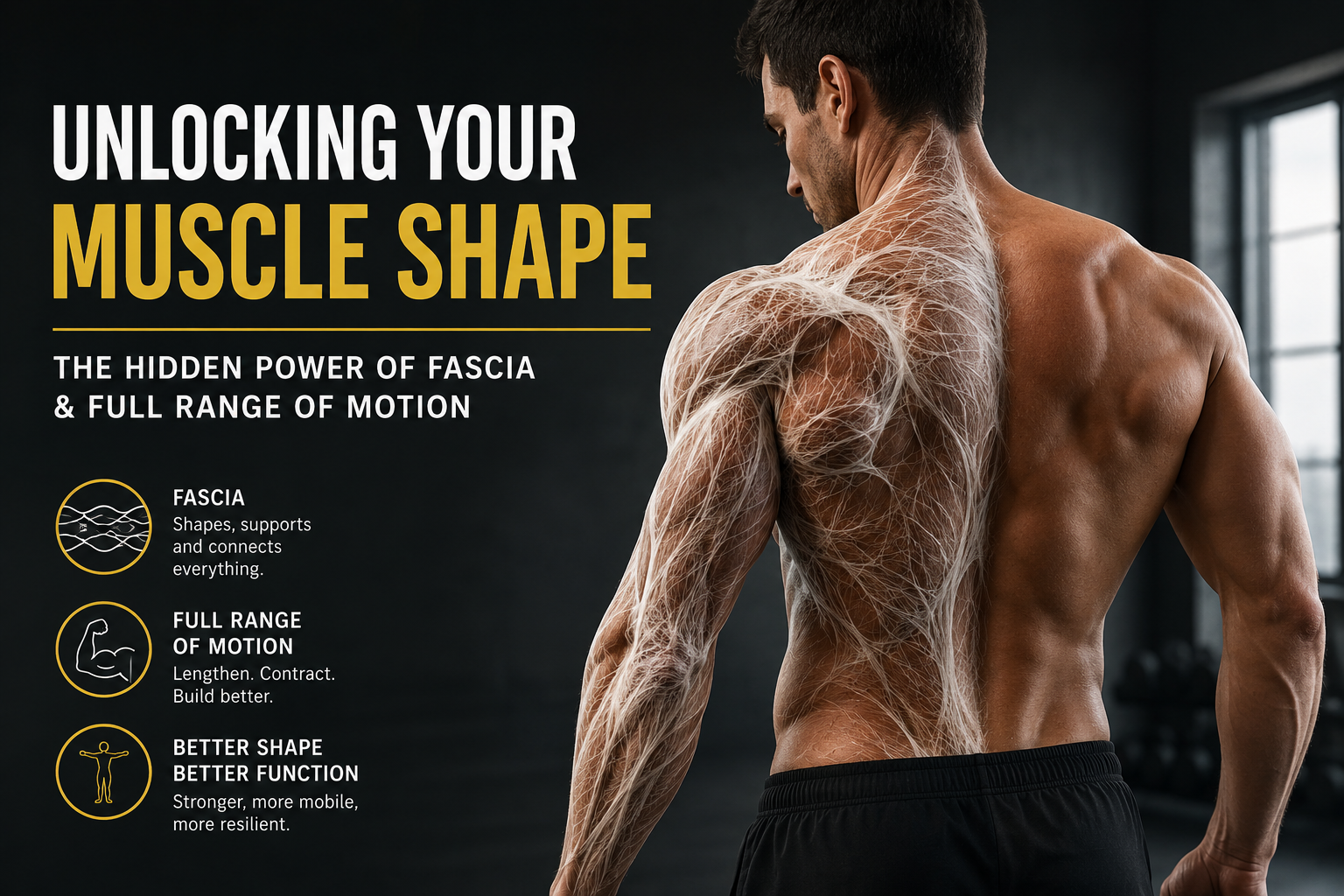
Unlocking Your Muscle Shape The Hidden Role of Fascia and Full Range of Motion
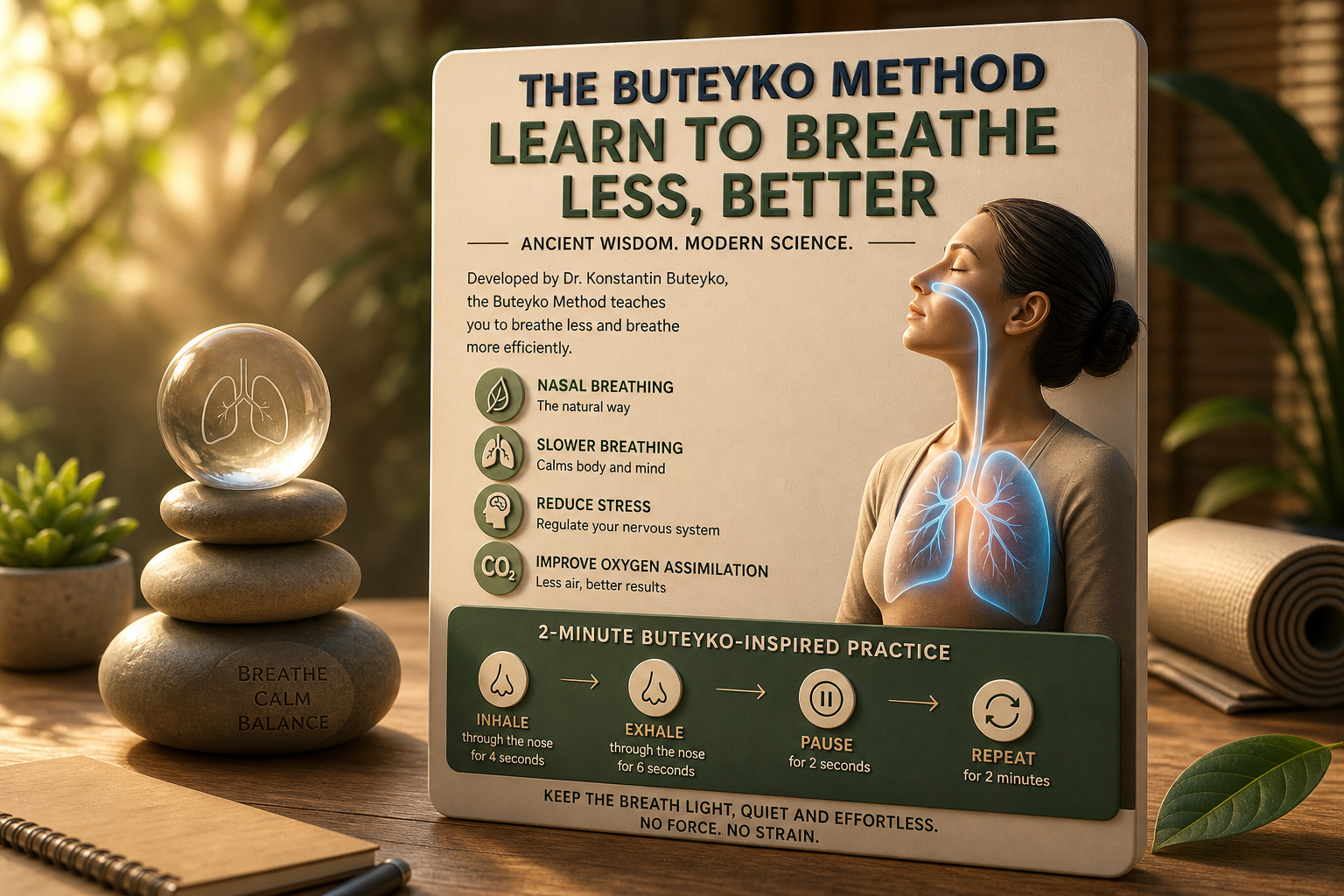
Buteyko Method poster with breathing tips, stacked stones, and a woman illustration in a calm spa setting
By Martial wahid Tebarki • May 1, 2026
The Buteyko Method: Learn to Breathe Less, Better
Infographic of citrus water with mint in a glass bottle, text: “Hydration isn’t a task, it’s a daily ritual.”
By Martial wahid Tebarki • April 26, 2026
Why drinking more water doesn’t always mean better hydration Most people believe that the more water they drink, the more hydrated they become. In reality, hydration is less about quantity and more about how well your body absorbs and uses water. Your body processes water gradually. Drinking large amounts at once often means the excess is quickly eliminated through urine, sometimes along with valuable minerals needed for fluid balance. This is why many people drink plenty of water and still experience signs of dehydration. The principle is similar to breathing: more isn’t always better. You don’t oxygenate your body by taking huge breaths, what matters is efficient exchange in the lungs. Hydration works the same way: steady, efficient absorption matters more than excess intake. Drink smarter Sip small amounts regularly throughout the day Start the morning with room-temperature water Avoid chugging large quantities all at once Support hydration with natural minerals and electrolytes Why temperature matters Ice-cold water may feel refreshing, but it’s not always ideal for digestion. Your stomach and intestines rely on smooth rhythmic contractions — Peristalsis — to move food and fluids efficiently. Very cold water can temporarily tighten these muscles and, in sensitive people, create heaviness, cramping, or digestive discomfort. ( If your kids are complaining about stomach pain, look at what they are dinking to rehydrate...) Your body also needs to warm very cold water before efficiently processing it, so this is a waste of energy. It is tiring your body unnecessarily. Room-temperature or slightly warm water is often easier on the body and gentler on digestion. Timing matters When you drink matters too. Hydrating between meals is often ideal. Drinking large amounts during meals may reduce the quality of your digestion by diluting gastric contents, which can make digestion feel heavier. A simple rhythm: Drink regularly through the day Hydrate before meals Resume after eating Avoid waiting until intense thirst appears When dehydration quietly happens Remember, you lose water constantly, often without noticing, especially: After sleep After exercise Sauna / heat exposure Alcohol High sugar intake Chronic stress Mouth breathers, or if you speak for hours ( teachers..) Long sun exposure Dry wind (which increases evaporation and respiratory water loss) Hydration should be continuous, not occasional. My personal hydration ritual I carry my water bottle with me everywhere. It has become part of my rhythm, not because I force myself, but because I know the body thrives on steady hydration. I often enrich my water naturally with: Fresh lemon A tiny pinch of mineral-rich salt Cucumber, mint, ginger a nd other natural blends I personally use, I’ll share the link on our what'sapp community I also like to drink coconut water as it hydrates very well the body For me, water is not just something to drink. It is daily nourishment for every cell in the body. Hydration is not about drinking more It’s about drinking better:
right amount, right timing, right temperature, right balance.
By Martial wahid Tebarki • March 29, 2026
Have you ever noticed how your pain follows your life more than your posture? A back that locks just before a difficult conversation. A migraine that shows up every Sunday evening. Shoulders that feel light and free on holiday… then tighten the moment you return home. This is not random a nd it is not “just in your head.” It is your nervous system responding to your environment. The Geography of Stress In practice, I’ve seen this pattern again and again: Pain that moves. Pain that flares without clear injury. Pain that disappears when life feels lighter. We often call this psychosomatic pain, but that term is misunderstood. The pain is real, t he biology is real, t he experience is real. What changes is not the truth of the pain but where it comes from. It is no longer just about tissues or structure. It becomes an interaction between your nervous system, your emotional load, and your physical body. Biology, Not Imagination Stress is not abstract. It is physical. When your brain perceives pressure whether it’s a deadline, tension at home, or something you are trying to avoid, it activates your sympathetic nervous system. And the body responds immediately: • Cortisol and adrenaline rise • Muscles tighten, preparing for action • Heart rate increases • Recovery and repair are pushed aside This response is designed to protect you. But when it becomes constant … it starts to wear you down. The body never fully switches off. Muscles stay slightly contracted. Inflammation increases. Pain sensitivity rises. What began as protection slowly becomes burden. Why You Feel It in Your Joints Many people say, “stress goes into my joints.” Not exactly. Tension begins in the nervous system. It expresses through the muscles. But the joints… are where you feel it the most. Why? Because muscles control how your joints move. When muscles stay tight: Movement becomes restricted, j oint lubrication decreases, l oad is no longer evenly distributed And this creates a loop: Stress → Tension → Restricted Movement → Joint Stiffness → Pain → More Stress A perfect cycle. The Hips Don’t Lie At the center of your body is a deep, powerful muscle: the psoas. It connects your spine to your legs and i t reacts instantly to stress. You may have heard that the psoas “stores emotions.” The truth is that it does respond to them, fast. If your system is constantly on alert, your psoas stays engaged. Your hips tighten, y our posture shifts, y our lower back begins to compensate. Over time, this becomes discomfort… then pain. The Ones Who Carry the Most There is a pattern I see often. The caregivers. The ones who hold everything together. The ones who don’t stop. They take on more. They give more. They ignore their own signals. Until the body stops whispering… and starts shouting. If you see yourself here, understand this: Your pain is not weakness, i t is the result of staying “on” for too long. A Different Way to Look at Healing Pain is not always damage, s ometimes, it is a message. A reflection of how your body, your mind, and your environment are interacting. Healing, then, is not only about fixing tissue. It is about: • Reducing the load you are carrying • Restoring movement where things feel stuck, most of the chronic pain and excessive stiffness in your body are due to tension you are holding for too long • Becoming aware of what your body has been holding Your body is not against you, It is adapting. Trying to protect you in the only way it knows how. Small changes, done consistently, can completely change how your body feels. I will be sharing simple, effective stretches and mobility routines for your chest, shoulders, and hips inside your private WhatsApp community.
By Martial wahid Tebarki • March 15, 2026
Look around in any café, metro, or waiting room. Almost everyone is looking down at a phone. This daily habit is quietly changing the posture of an entire generation. Neck pain, once common mostly in adults, is now appearing in children and teenagers. Many young people already show a forward head posture and rounded shoulders, patterns that used to develop only later in life. A key reason lies in the close relationship between the eyes, the head, and the neck . The Eyes Guide the Position of the Head The neck’s main role is to stabilize the head so the eyes can maintain a clear visual field. When the eyes move naturally, looking into the distance, scanning the environment, and shifting focus between different depths, the head and neck remain relatively balanced. But modern screen use changes this behavior. Instead of exploring a wide visual field, the eyes often remain fixed on a small screen or a computer at a short distance. At the same time, the head tilts downward and often fixing always the same screen/spot for too long This position forces the neck muscles to support the weight of the head in a forward angle. The human head weighs around 4 to 5 kilograms, but when it tilts forward the mechanical load on the cervical spine increases significantly. Maintaining this position for long periods can gradually lead to muscular fatigue, stiffness, and discomfort in the neck and shoulders. When Eye Movement Becomes Limited Healthy vision involves constant movement. The eyes shift direction, adjust focus, and explore different distances. Screen use reduces this variability. Instead of large movements and depth changes, the eyes perform small repetitive movements within a narrow visual range, while the focus remains at a close distance. Meanwhile, the neck remains almost static while supporting the head in a downward position. Over time, this combination can create tension in the muscles of the neck and upper back. Why Children Are Showing “Older” Posture Forward head posture has long been associated with aging. Over the years, gravity and muscular imbalance may gradually pull the head forward in many adults. Today, similar patterns are appearing much earlier. Many children spend a large part of their day looking down at phones, tablets, or gaming devices. Repeating the same downward gaze encourages the body to adapt to that position: the head moves forward, the shoulders round slightly, and the upper back becomes more curved. The body adapts to what it does most often. The Link Between Visual Strain and Neck Tension Visual concentration can also influence muscle activity in the neck. When the eyes focus intensely on small text or detailed images, the body may subtly adjust the head position to improve visual clarity. This adjustment can increase tension in the trapezius and other muscles that stabilize the neck and shoulders. Encouraging the eyes to move regularly and allowing visual breaks can therefore help reduce unnecessary stress on the neck. Some eye relaxation techniques were popularized by William Horatio Bates and are also present in traditional yoga eye practices. Simple Eye Exercises Encouraging movement in the eyes can help reduce visual fatigue and may also ease tension in the neck. One simple exercise can be done with a pen. Hold a pen in front of you and follow the pen only with your eyes while keeping your head still. Move the pen: - Side to side - Up and Down - Zoom in, Z00m out ( Slowly bring the pen closer to your eyes and move it away ) This exercise encourages the eyes to move and adjust their focus instead of remaining fixed on a small screen. - Palming Rub your hands together to create warmth and gently place your palms over closed eyes without pressing. Resting the eyes in darkness allows the visual system to relax. 30 to 2 minutes - Sun relaxation With the eyes closed, briefly face natural sunlight. The warmth and brightness can help the eyes relax after long periods indoors. 30 seconds to 1 minute A simple habit often recommended for people working with screens is the 20-20-20 rule: every 20 minutes, look at something about 20 feet away for 20 seconds. In addition to these exercises, I will share few additional eye exercises by video, which can further help mobilize the visual system and relax the muscles involved in prolonged screen use. A Simple Idea to Remember Our eyes guide the position of our head, and the head shapes the posture of the spine. When our visual world shrinks to the size of a phone screen, the body gradually adapts to that small space. Sometimes neck pain is not about the neck at all It is the body adapting to how we look at the world today: through the screen of a phone.