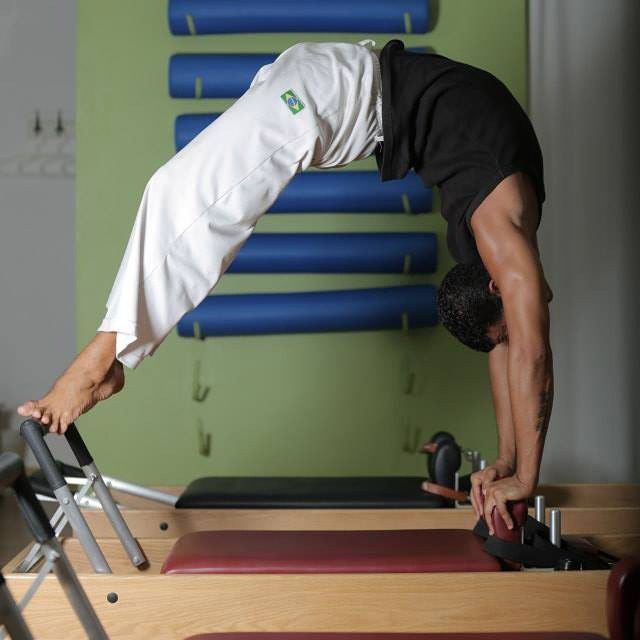
Are we meant to eat more Plants ? Finding Balance in Modern Diets
As humans, our bodies reveal much about what we might naturally thrive on.
Observing our physiology and the rhythms of our lives offers clues about a balanced diet that respects both our nature and our unique needs.
Here are some perspectives on this:
1. Circadian Rhythms
Humans, in contrast to numerous carnivorous animals, are creatures driven by the rhythms of the day.
Our hours of activity coincide with those of gatherers who collect fruits, vegetables, and grains, rather than with nocturnal hunters who pursue their prey in the shadows. This behavior suggests that our main sources of nourishment likely come from elements accessible during daylight, mirroring the habits of herbivores or gatherers.
2. Digestive System
Our digestive systems are elongated, akin to those of herbivores, expertly crafted to decompose fibrous plant matter.
This gradual process thrives on high-fiber, plant-based sustenance, in contrast to the shorter, more straightforward tracts of carnivores, which swiftly handle protein-dense meat.
Historically, hunting demanded considerable effort, involving long treks and immense endurance, making meat more of a seasonal luxury than a daily essential.
Nowadays, however, meat is readily available with little exertion, prompting many to adopt a more sedentary lifestyle than nature intended.
This change may be a factor in the growing health imbalances we see today.
Over the years, I have noticed an increasing number of individuals experiencing hormonal imbalances.
In addition to the excessive processed foods and pollution we are exposed to, we have likely disrupted our natural biological rhythms and eating habits as well.
While individual dietary needs vary greatly, the fundamental laws of nature indicate that nourishment is vital for survival. A deficiency in specific nutrients can compromise our immune system, putting us at risk.
Individuals who enjoy the longest and healthiest lives, such as those found in
“Blue Zones,”
appear to adopt a comprehensive lifestyle.
These regions, recognized for having the highest numbers of centenarians, demonstrate that longevity frequently stems from varied diets rich in vegetables, whole grains, occasional meat, and regular physical activity.
This harmonious approach, aligned with our nature, promotes a balanced combination.
Conclusion
Lately, the yoga community mourned the sudden loss of
Sharath Jois
at 53 years old ( November 11, 2024), a respected teacher of Ashtanga Yoga, who passed away from a heart attack.
A prominent figure in the yoga community.
It is important to remember that achieving physical well-being involves more than just spiritual practices.
Our bodies serve as vessels that require proper nourishment, and research indicates that a diverse diet, consistent physical activity, and mindful living play key roles in fostering resilience and promoting longevity.
Perhaps the way forward lies less in adhering strictly to plant-based or animal-based diets and more in embracing balance and the natural rhythms of life.
.......................................................................................................................................................................................................
Here’s a proposed daily plan that aligns with the circadian rhythm while emphasizing a plant-based diet over meat.
This plan closely resembles my own eating habits, which are integral to my lifestyle: easily digestible foods in the morning, substantial and well-balanced meals at midday, and lighter fare in the evening.
Occasionally, I incorporate intermittent fasting during the day, but that’s a topic for another discussion.
Morning (Breakfast)
- Time: Between 7:00 - 9:00 AM (as metabolism begins to awaken)
- Meal:
- Start with warm lemon water or herbal tea (such as chamomile, ginger, or mint) to ignite digestion.
- Enjoy a nutrient-dense green smoothie:
- Blend spinach, kale, or mixed greens with chlorella powder.
- Add 1/2 avocado or 1 tbsp of flax/chia seeds for healthy fats.
- Incorporate 1/2 cup of unsweetened almond or oat milk.
- Toss in fresh berries (blueberries, blackberries).
- Savor one cup of black coffee.
---
Midday (Lunch)
- Time: Between 12:00 - 2:00 PM (when digestion is at its peak)
- Meal:
- Delight in a hearty Buddha bowl:
- Base: Quinoa, farro, or brown rice.
- Veggies: Steamed broccoli, roasted sweet potatoes, carrots, and raw cherry tomatoes.
- Protein: 1/2 cup of cooked lentils or chickpeas.
- Fats: 1 tbsp of tahini dressing or hummus.
- Extras: A sprinkle of seeds (pumpkin or sesame) and fresh herbs (cilantro or parsley).
- Complement with a side of leafy greens dressed in olive oil and lemon juice.
- Include fish twice a week and high-quality organic grass-fed meat once a week.
---
Evening (Dinner)
- Time: Between 6:00 - 7:00 PM (earlier for optimal digestion)
- Meal:
- Warm up with a comforting vegetable soup:
- Ingredients: zucchini, celery, leeks, spinach, garlic, and fresh herbs (thyme or oregano).
- Base: Vegetable broth with a splash of coconut milk for added creaminess.
- Optionally, enjoy a small portion of lightly grilled or steamed fish for omega-3s. Alternatively, consider a handful of baked tofu or tempeh.
- Add a small side of roasted or steamed asparagus or green beans.
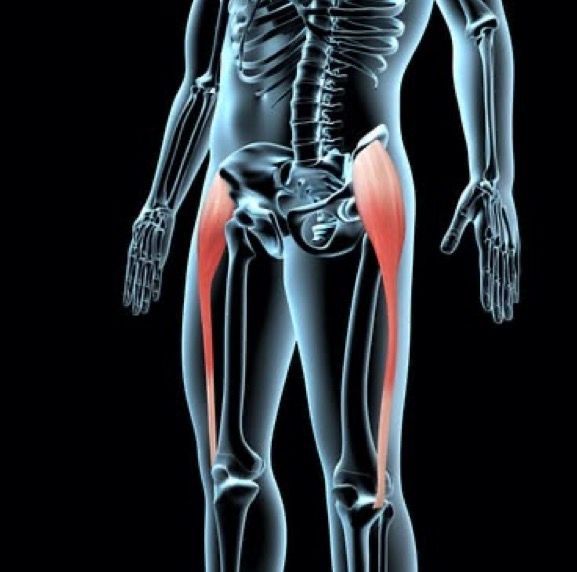
The TFL: The Pain Is Often a Sign, Not the Cause
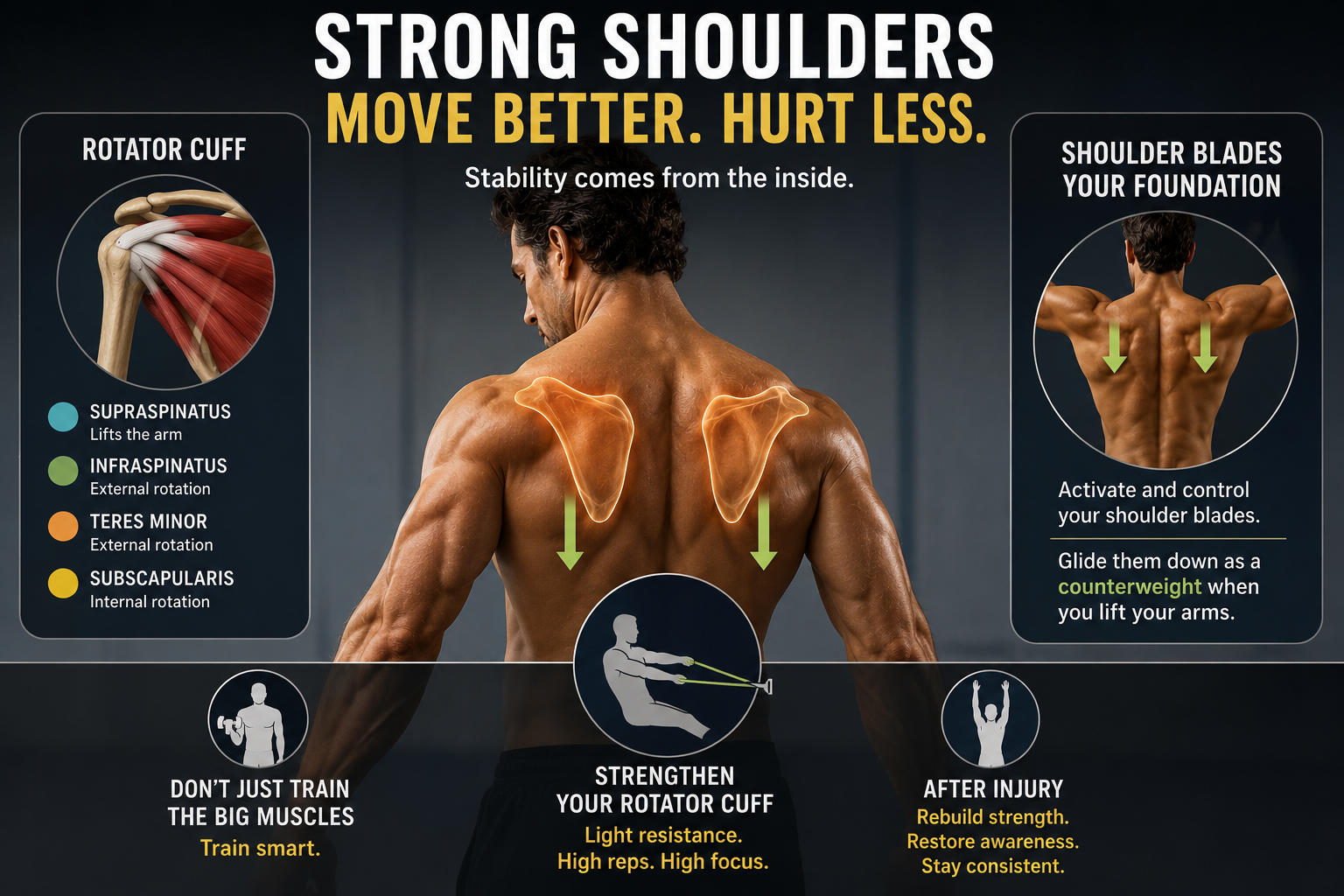
The Shoulder: Maximum Mobility Needs Maximum Stability
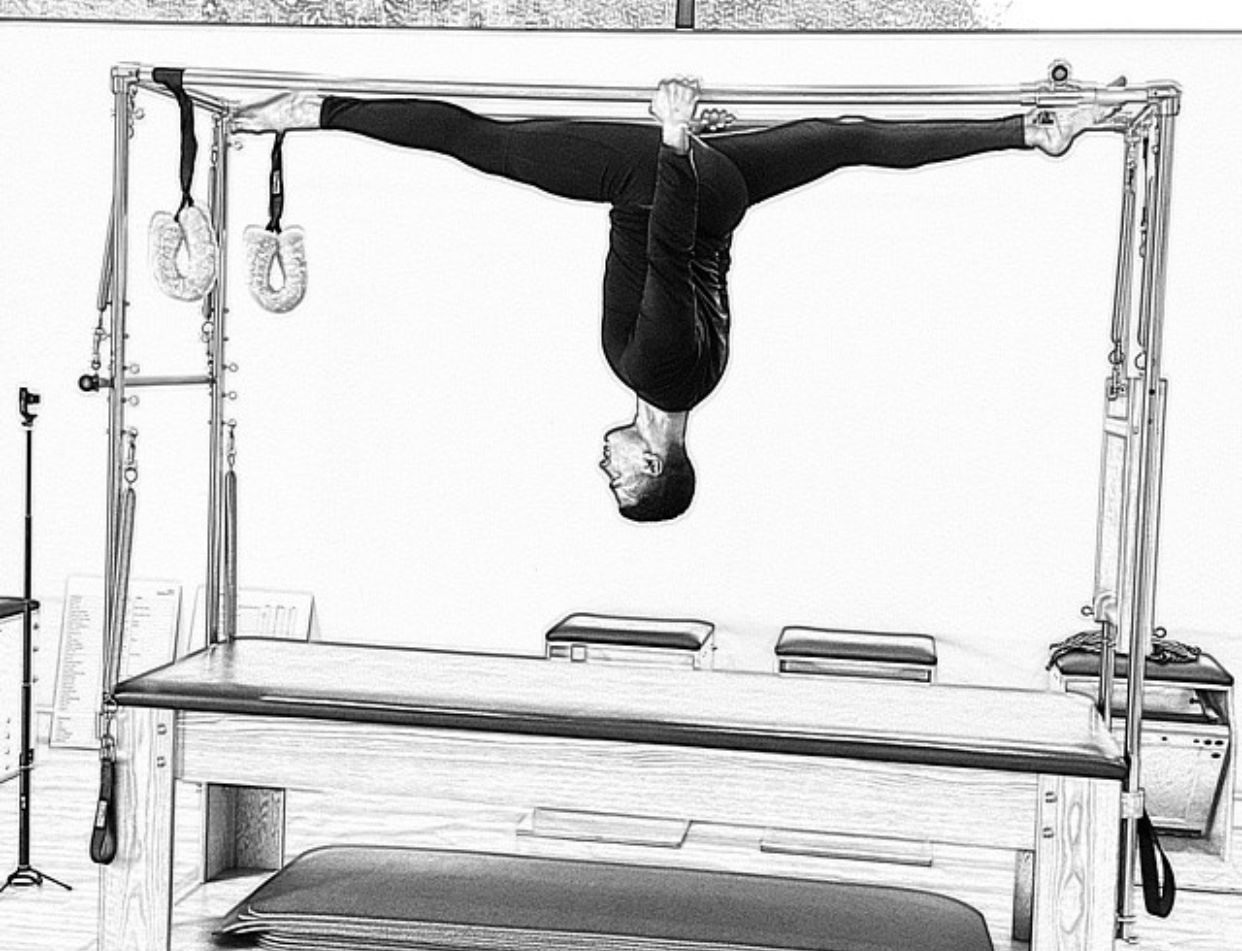
Beyond the Bend Why Flexibility Isn’t Just About Stretching
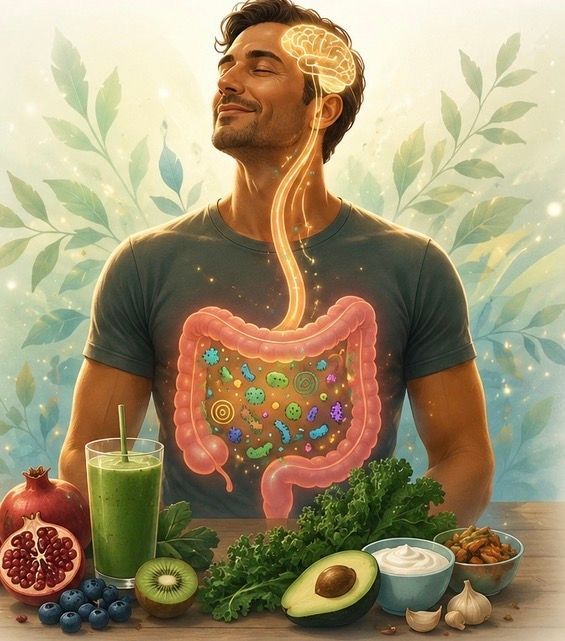
Feed Your Gut, Not Your Cravings

Flat belly-Visible Abs: The Truth Behind a Strong Core

How I Stay Healthy, Energetic, and Youthful: My Personal Approach to Longevity
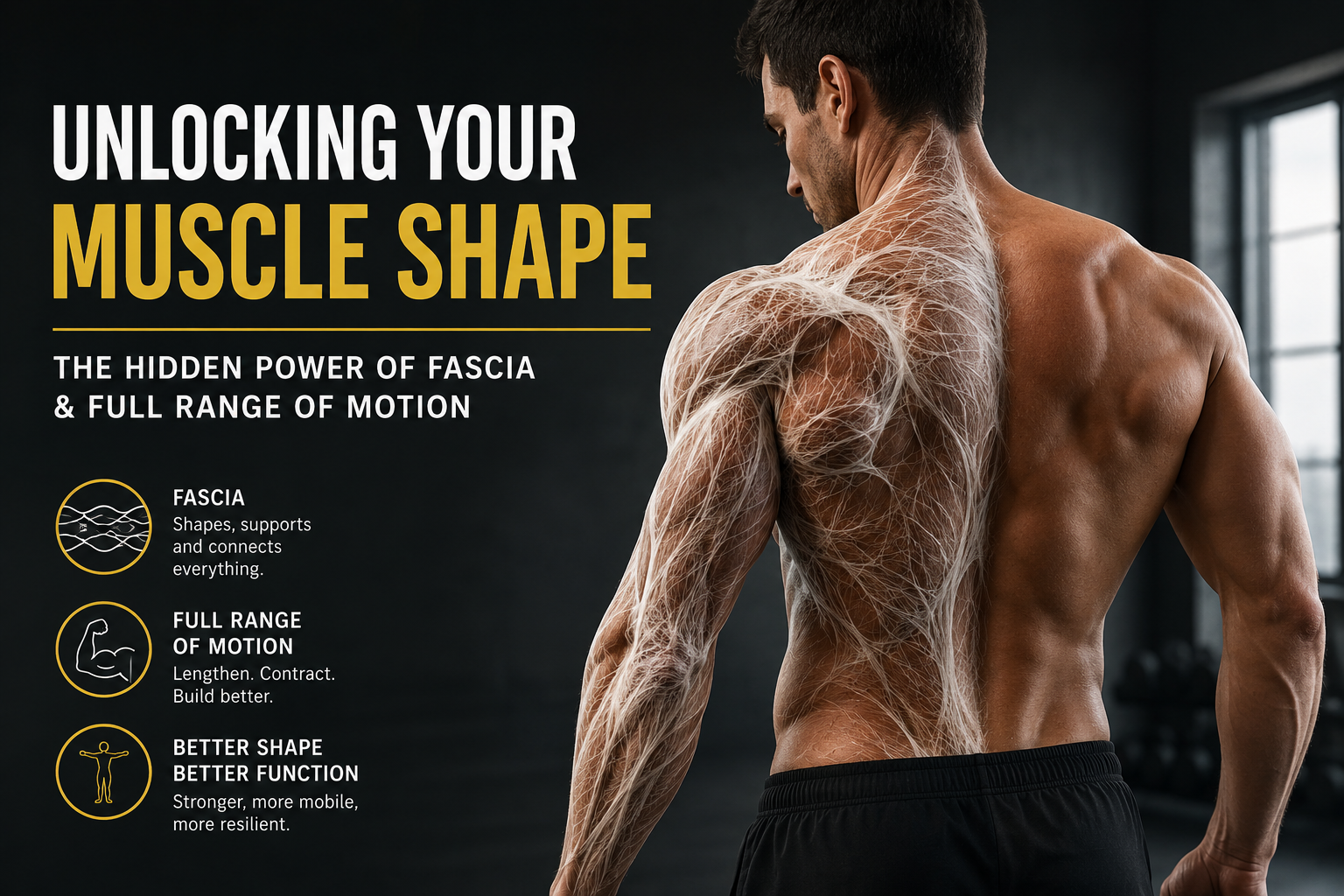
Unlocking Your Muscle Shape The Hidden Role of Fascia and Full Range of Motion
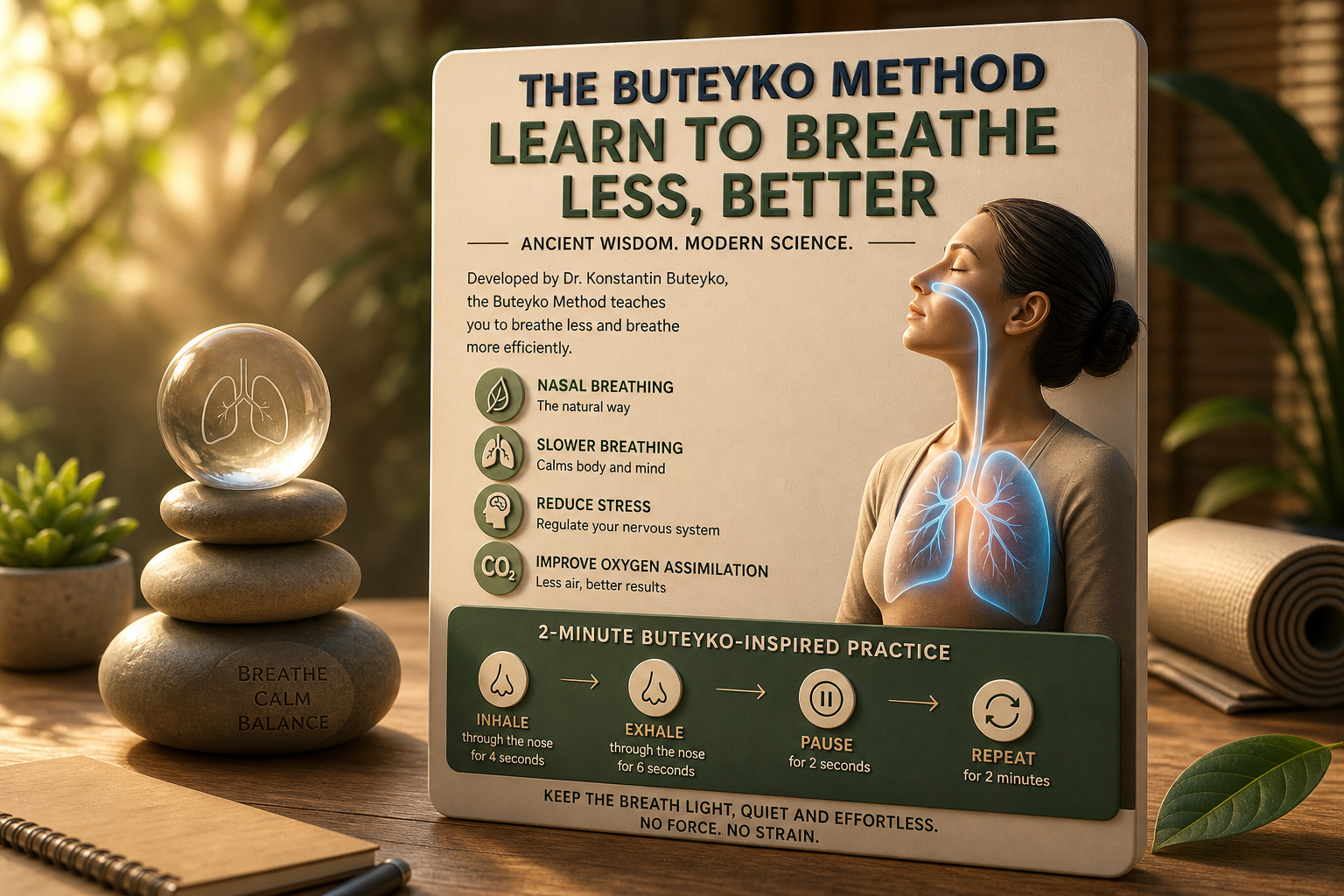
The Buteyko Method: Learn to Breathe Less, Better

Why drinking more water doesn’t always mean better hydration Most people believe that the more water they drink, the more hydrated they become. In reality, hydration is less about quantity and more about how well your body absorbs and uses water. Your body processes water gradually. Drinking large amounts at once often means the excess is quickly eliminated through urine, sometimes along with valuable minerals needed for fluid balance. This is why many people drink plenty of water and still experience signs of dehydration. The principle is similar to breathing: more isn’t always better. You don’t oxygenate your body by taking huge breaths, what matters is efficient exchange in the lungs. Hydration works the same way: steady, efficient absorption matters more than excess intake. Drink smarter Sip small amounts regularly throughout the day Start the morning with room-temperature water Avoid chugging large quantities all at once Support hydration with natural minerals and electrolytes Why temperature matters Ice-cold water may feel refreshing, but it’s not always ideal for digestion. Your stomach and intestines rely on smooth rhythmic contractions — Peristalsis — to move food and fluids efficiently. Very cold water can temporarily tighten these muscles and, in sensitive people, create heaviness, cramping, or digestive discomfort. ( If your kids are complaining about stomach pain, look at what they are dinking to rehydrate...) Your body also needs to warm very cold water before efficiently processing it, so this is a waste of energy. It is tiring your body unnecessarily. Room-temperature or slightly warm water is often easier on the body and gentler on digestion. Timing matters When you drink matters too. Hydrating between meals is often ideal. Drinking large amounts during meals may reduce the quality of your digestion by diluting gastric contents, which can make digestion feel heavier. A simple rhythm: Drink regularly through the day Hydrate before meals Resume after eating Avoid waiting until intense thirst appears When dehydration quietly happens Remember, you lose water constantly, often without noticing, especially: After sleep After exercise Sauna / heat exposure Alcohol High sugar intake Chronic stress Mouth breathers, or if you speak for hours ( teachers..) Long sun exposure Dry wind (which increases evaporation and respiratory water loss) Hydration should be continuous, not occasional. My personal hydration ritual I carry my water bottle with me everywhere. It has become part of my rhythm, not because I force myself, but because I know the body thrives on steady hydration. I often enrich my water naturally with: Fresh lemon A tiny pinch of mineral-rich salt Cucumber, mint, ginger a nd other natural blends I personally use, I’ll share the link on our what'sapp community I also like to drink coconut water as it hydrates very well the body For me, water is not just something to drink. It is daily nourishment for every cell in the body. Hydration is not about drinking more It’s about drinking better:
right amount, right timing, right temperature, right balance.
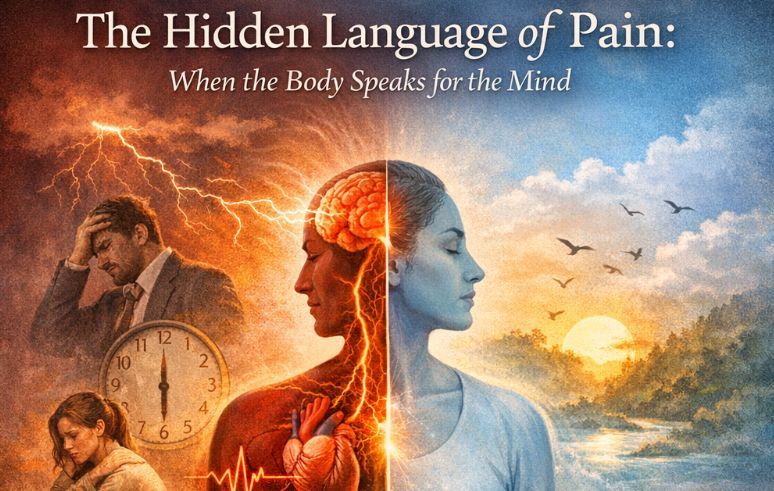
Have you ever noticed how your pain follows your life more than your posture? A back that locks just before a difficult conversation. A migraine that shows up every Sunday evening. Shoulders that feel light and free on holiday… then tighten the moment you return home. This is not random a nd it is not “just in your head.” It is your nervous system responding to your environment. The Geography of Stress In practice, I’ve seen this pattern again and again: Pain that moves. Pain that flares without clear injury. Pain that disappears when life feels lighter. We often call this psychosomatic pain, but that term is misunderstood. The pain is real, t he biology is real, t he experience is real. What changes is not the truth of the pain but where it comes from. It is no longer just about tissues or structure. It becomes an interaction between your nervous system, your emotional load, and your physical body. Biology, Not Imagination Stress is not abstract. It is physical. When your brain perceives pressure whether it’s a deadline, tension at home, or something you are trying to avoid, it activates your sympathetic nervous system. And the body responds immediately: • Cortisol and adrenaline rise • Muscles tighten, preparing for action • Heart rate increases • Recovery and repair are pushed aside This response is designed to protect you. But when it becomes constant … it starts to wear you down. The body never fully switches off. Muscles stay slightly contracted. Inflammation increases. Pain sensitivity rises. What began as protection slowly becomes burden. Why You Feel It in Your Joints Many people say, “stress goes into my joints.” Not exactly. Tension begins in the nervous system. It expresses through the muscles. But the joints… are where you feel it the most. Why? Because muscles control how your joints move. When muscles stay tight: Movement becomes restricted, j oint lubrication decreases, l oad is no longer evenly distributed And this creates a loop: Stress → Tension → Restricted Movement → Joint Stiffness → Pain → More Stress A perfect cycle. The Hips Don’t Lie At the center of your body is a deep, powerful muscle: the psoas. It connects your spine to your legs and i t reacts instantly to stress. You may have heard that the psoas “stores emotions.” The truth is that it does respond to them, fast. If your system is constantly on alert, your psoas stays engaged. Your hips tighten, y our posture shifts, y our lower back begins to compensate. Over time, this becomes discomfort… then pain. The Ones Who Carry the Most There is a pattern I see often. The caregivers. The ones who hold everything together. The ones who don’t stop. They take on more. They give more. They ignore their own signals. Until the body stops whispering… and starts shouting. If you see yourself here, understand this: Your pain is not weakness, i t is the result of staying “on” for too long. A Different Way to Look at Healing Pain is not always damage, s ometimes, it is a message. A reflection of how your body, your mind, and your environment are interacting. Healing, then, is not only about fixing tissue. It is about: • Reducing the load you are carrying • Restoring movement where things feel stuck, most of the chronic pain and excessive stiffness in your body are due to tension you are holding for too long • Becoming aware of what your body has been holding Your body is not against you, It is adapting. Trying to protect you in the only way it knows how. Small changes, done consistently, can completely change how your body feels. I will be sharing simple, effective stretches and mobility routines for your chest, shoulders, and hips inside your private WhatsApp community.